Well, Ahmad al-Shukeiri - history expert! Said A, say B too😏 Very interesting what was before Ottoman empire on this land? Have you ever heard something about Roman empire?🤨
At a meeting of Arab experts on the Palestinian issue, held in July this year in Stohr (Lebanon), Shukairi presented a project for organizing a movement for the liberation of Palestine, covering the political, economic, financial and military aspects of the organization. Most of the project, with the exception of the military section, was published on August 1 in the newspaper "As-Siyasa". All Arab countries, including Jordan, approved the project in principle...
The essence of Shukairi's plan is that since the Palestinian people exist, they must organize to liberate Palestine. The Palestinian problem is an independent, self-contained question. Palestine must be restored to its former borders. This latter circumstance is feared by King Hussein of Jordan, since Jordan has captured part of Palestine and 1 million Palestinians live in the country. Therefore, King Hussein is against such a plan for solving the Palestinian problem. Jordanian Foreign Minister Hasem Nuseibeh in a conversation with Shukairi said that he personally supported the Shukairi plan, but the king could not be persuaded.
Shukairi said that he was even in favor of Jordan not only retaining part of Palestine, but that all of liberated Palestine would be annexed to Jordan. The main task is to liberate Palestine and eliminate Israel, regardless of whether Palestine is independent or annexed to Jordan...
We did a very important thing. We create a new people. And instead og being a refugees, to be fighters is very important. We were "refugees", "homeless". We became now "fighters", "freedom fighters"
Take a listen to the Egyptian propagandist, Yasir Arafat in 1971: "We created a new people from refugees and homeless." pic.twitter.com/FdJoACkjO7
— Jasem Aljuraid | جاسم الجريّد (@JJJuraid) June 30, 2026
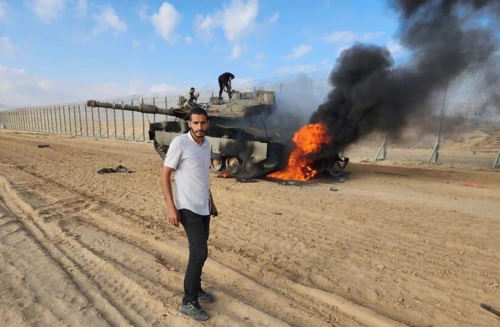
Did you know that so-called "palestinians" never existed?
"Tussen Jordaniërs, Palestijnen, Syriërs en Libanezen bestaan er geen verschillen. Wij maken deel uit van één volk, de Arabische natie. Kijk maar, ik heb familieleden met het Palestijnse, Libanese, Jordaanse en Syrische staatsburgerschap. Wij zijn één volk. Alleen maar om politieke redenen onderschrijven wij zorgvuldig onze Palestijnse identiteit. Het is namelijk van nationaal belang voor de Arabieren om het bestaan van de Palestijnen aan te moedigen tegenover het zionisme. Ja, het bestaan van een aparte Palestijnse identiteit is er alleen om tactische redenen. De stichting van een Palestijnse staat is een nieuw middel om de strijd tegen Israel en voor de Arabische eenheid voort te zetten." (bron: interview in Trouw, 31 maart 1977, zie onder)
"There are no differences between Jordanians, Palestinians, Syrians, and Lebanese. We are part of one people, the Arab nation. Just look, I have family members with Palestinian, Lebanese, Jordanian, and Syrian citizenship. We are one people. Only for political reasons do we carefully endorse our Palestinian identity. It is, after all, in the national interest of the Arabs to encourage the existence of the Palestinians in opposition to Zionism. Yes, the existence of a separate Palestinian identity exists only for tactical reasons. The establishment of a Palestinian state is a new means to continue the struggle against Israel and for Arab unity." (source: interview in Trouw, March 31, 1977, see below)
allah be praised we all have arab roots, and every palestinain, in Gaza and throughout palestine, can prove his arab roots - whether from Saudi Arabia, from Yemen, or anywhere. We have blood ties. So where is your affection and mercy? Personally, half my family is Egyptian. We are all like that. More than 30 families in the Gaza strip are called Al-Masri ("Egyptian"). Brothers. Half of the palestinians are Egyptians and the other half are Saudis! Who are the palestinians? We have many families called Al-Masri whose roots are Egyptian. Egyptian! They may be from Alexandria, from Cairo, from Dumietta. From the North, from Aswan, from Upper Egypt, We are Egyptians! We are arabs! We are muslims! We are a part of you! allahu akbar! All praise to allah!
A senior Hamas official accidentally reveals the absolute truth in a Freudian slip during a television interview:
"We PALESTINIANS ARE NOT INDIGENOUS of this place. We are Arabs. Half of us are actually Egyptians, and the other half are Saudis. We are not from here!" pic.twitter.com/3U8fIvhlE6
— GAZAWOOD - The Pallywood Saga - BACKUP (@GAZAWOOD2) July 15, 2026
double for some reason
Well... based on everything said above, it turns out that there are not and never have been any "Palestinians", just as there is no "Palestine"🤔
I want to wish you exist for at least as many more years😃 Please, don't repeat the historical mistakes of the Roman Empire - don't let yourself be destroyed by barbarians in "arafatkas" with sickle-and-hammer rags! And don't help your enemies anymore, which, unfortunately, you have done many times over the past two centuries.
I'd like English-speaking readers to listen to Sergey Lyubarsky's story. He has an English-language channel, but this particular video isn't available there yet. If it does, I'll replace it. In the meantime, turn on translated subtitles and listen to him talk about how many times the US saved Russia from famine, built industry in the USSR, and supplied it with weapons during World War II. American socialist traitors even allowed the USSR to obtain the secrets of American nuclear weapons! And what a base ingratitude Russia has shown for all this. Without a doubt, communist China, fed by the same technological hand, behaves similarly!
He gained wide recognition as a translator, or more precisely as a "voice actor". His voice acting is considered "classic" for films like "The Sopranos" or "Pulp Fiction". And I must admit that I personally burst out laughing in the early 2000s precisely from his translation of "South Park: Bigger, Longer and Uncut"
However, this character also actively engages in publicist work and "instills" "correct values" in Russian youth. Socialist values. Dmitry Puchkov is a lover of the Soviet Union and especially of Comrade Stalin. He openly mocks those who try to talk about Stalin's repressions, calls them "liars," etc., in a word, he does not allow the glorious socialist past to be discredited. He is the author of the phrase: "An anti-Soviet person is always a Russophobe".(c)
He also actively supported Russia's invasion of Ukraine and is completely on the side of Russian patriots. He sees in Putin's system a continuation of the glorious traditions of Russian power - a "firm hand" that is "very necessary" for the russian people.
Dmitry is a significant leader of public and patriotic opinion. Before personal sanctions were imposed on him and his YouTube channel was shut down, he had around 3 million subscribers.
Turn on english subtitles or english voiceover and listen to what he says.
All of the above means that the words he spoke carry a solid weight and you, the reader who dreams of so-called "social justice" and "basic rights" should not doubt what he says.
I invite you to read some excerpts from his own website, oper.ru ("oper" means "operative officer" in soviet/russian militia, in 2010s militia remamed to police; in 1990-s Puchkov worked in jail), written back in 2004. It's about Dmitry's youth, which coincided with the "Brezhnev stagnation", often considered a kind of "ideal" among fans of the Soviet Union (after Stalin's epoch of course) and its "free" apartments, education, and healthcare.
It was under Brezhnev that the "great Komsomol construction project" — the Baikal-Amur Mainline — began, which even the American singer Dean Reed visited (incidentally, I'll write about him a little later).
There was nothing else to do — I still had three months before the army — so I went to work. Naturally, at a grocery depot, where theft under Soviet rule was so rampant that even during Perestroika, not everyone could boast of such a level...
My older comrades stole with all their might. My mentor, a father of six, was so blatant that the food industry probably still hasn't recovered.
Here I should clarify: for "true" lovers of the Soviet Union, Perestroika is a cursed time, and Mikhail Gorbachev is a "traitor." They hate perestroika and Gorbachev for introducing Glasnost — relative freedom of speech (by the late 1980s, "free" media emerged) — and for the opportunity to start one's own business, which until then had been punishable by law. It became possible to "sling mud" (as they put it) at the country, spread "lies" and "disinformation." And here, unfortunately, it must be acknowledged: the information vacuum created by the Soviet regime did indeed generate much frankly unreliable or thoroughly distorted information. Western media, for example, suffered from this, reporting thousands of victims of the Chernobyl disaster (which never happened), which, however, cannot be ruled out as a Lubyanka operation to discredit the source of information.
In short, reader, I hope you understand that in a free society, even an imperfect one with its own shortcomings, such issues are not and could not exist.
Later, all this freedom, which the Soviet people had not seen since the "New Economic Policy" of the 1920s, led to the collapse of the USSR.
People like Puchkov call reports of theft, like the infamous "Khlopkovoye delo", a "denigration of socialist reality". But consider his words: "...even during Perestroika, not everyone could boast of such a level."
Let's read on!
Naturally, only those who worked in the top positions fared well, and these were all respectable veterans. Every day, a market was set up in the locker room—whoever stole what, sold it. The hottest items were smoked sausage, meat, and alcohol. Smoked sausage was a luxury, some kind of rowan berry infused with cognac (I've never tried it) was a luxury, and the meat was high-quality and very cheap. The beer drinkers chugged away their beer by the bucketload. During trading, there would always be a general drinking binge—they'd drink heavily and seriously.
Everyone stole, without exception. And I helped my mentor, a father of six, steal because he taught me. It went like this: he'd show me what and how to stack the truck, I'd stack it, he'd negotiate with the inspectors at the checkpoint, we'd leave, and he'd sell the surplus to stores. Naturally, he didn't give me any money—that wasn't part of the training. He was caught a couple of times in my presence. Of course, that didn't stop anyone else—they were stealing from the factory like crazy.
But when I'd practically mastered the craft and was ready for all aspects of socialist labor, my internship at the dairy ended, my mentor was put on trial, and I was suddenly transferred to the bakery. But there, everything was different; you had to steal something completely different and in completely different ways. While I was scrounging around to find where they hid their yeast and gobbling gingerbread, I was transferred to work in kindergartens. The bakery remained untouched, just as the dairy had been before it. Everyone stole from the kindergartens, too, from the drivers to the teachers. Stealing food from children is, in my opinion, the ultimate lowlife. So I only ate from the kids, because at all the kindergartens, even skinny as I was, kindhearted women fed me. The women always liked me...
To avoid being accused of making this all up, I'm attaching a screenshot from his page and the link itself. Pay attention to the website's design, by the way.
Just answer this question for yourself, reader: why would a person in the "advanced country of victorious socialism" steal food? Sausage, beer... By the way, the father of six, the respected "veteran of labor" who had 18-year-old Puchkov as an "apprentice"? Think about it🤔
This was the testimony of a very "authoritative" citizen. Now here are the testimonies of other people. Unfortunately, I can't tell you his name, and it won't tell anyone anything, but you can simply compare it with what was written above.
I worked at the 35th Automotive Plant, Glavmosavtotrans. We transported everything — groceries, alcohol, flowers, ice cream. Whoever was transporting stole what they were carrying. Two buddies loaded a truck with vodka, filled it with bottle caps, poured the vodka into a bucket, filled it with water, tied the caps with rope to make it look like they were carrying something, and took it to the store. They arrived at the depot and started drinking. They drank all night, and in the morning they poured drinks for everyone who showed up for work. The departure of the trucks was in danger of being disrupted. The leader of the convoy forcibly put them in the car and drove them away from the depot. And yes, the stories about how water sometimes got into the vodka bottle aren't always just stories. Who would believe alcoholics? Did they drink themselves and come to demand their license? Nobody even talked to them. 1982."
"To steal milk, they'd remove the foam from the truck bed and stuff the milk into the resulting "double bottom". The profit was 25 rubles (at that time the exchange rate was approximately 0.64 rubles per dollar).
When transporting sacks of sugar, they'd "milk" the sugar with a special device until the sack was full — a profit for 50 kg of sand (they call sugar like this).
When transporting fish, they'd simply shortchange one or two fish. The stores were "silent".
When transporting meat, they'd pour water on it—a 'glaze.'
Butcher drivers were considered the highest caste of drivers. But they were also the most frequently arrested.
Others stole small items—a couple of chocolate bars, a couple of loaves of bread, a kilo of sausage. My shift worker and I were called into 'office #1' and told: "Three tons of chocolates have been stolen using the license plate number of your truck. We know you were elsewhere and your truck is only equipped to transport baked goods. But perhaps you heard something?" No, we didn't hear anything...
And here's another one. This is testimonies of Boris Lesnyak - close friend of Varlam Shalamov, also a former political prisoner of the Kolyma Gulag camps and later - Honorary Citizen of Magadan, Russia. He and his wife, also an honorary citizen of Magadan, doctor Nina Savoeva (Shalamov mentioned both of them many times in his works), are one of the interviewees in this video.
These are quotes from his book "I have come to you!". You can read it all. At first here the author tells us what the situation was like in the Gulag labor camps even under Stalin. Just so you understand what kind of atmosphere there was in the prison hospital.
...The corruption in the Zaplag (means "Zapadniy lager' " or "Western Camp", labour of course) district hospital was phenomenal. The entire hospital was a cluster of commercial centers. The pharmacy and medical staff sold medicines, the hospital laundry sold linens, the bakery sold oats, and the vegetable garden sold vegetables. The head physician, Nina Vladimirovna's predecessor, the hospital's paramilitary guards, the wardens, and the imprisoned doctors took the best food from the hospital cauldron. The patients were starving. The hospital grounds were littered with garbage and refuse. This was the legacy Savoeva inherited.
With the arrival of the new head physician, the anthill stirred, became alert, and bristled. Savoeva's arrival at this hospital did not bode well for the thieves, slackers, and parasites. War had been declared, and it had begun...
...1948 was a difficult year for us.
The author writes this much later, after being released:
...For example, the sale of packaged goods is a good, progressive form of commerce. But due to some internal, deep-seated reasons, there is almost always a shortage of one type of product. Whether demand exceeds supply, or there aren't enough packers, or the goods are in short supply, a line forms, and with it, anxiety and commotion. Let's imagine a supermarket, a sausage section. A case-like counter with packaged products stands against a glass wall separating the sales floor from the packing area. A decent sausage or frankfurters are on sale. There are many people wanting them, and the packers can't keep up. The saleswoman standing at the packing window no longer lays out the goods, doesn't even dump them out, but throws them one or two weights at a time, angrily, furiously: throwing them like a bone to a dog. And the buyer, like a dog with a bone, grabs and catches the package on the fly, simultaneously working his elbows, shoulders and backside, defending his position...
Now just go back to the previous character who (according to him) helped the father of 6 children steal
Just ask yourself, how is this possible?
Okay, I agree, not everything is perfect in the US, and there's theft, too, but excuse me! You've been told that socialism is the most honest system, with exceptionally polite people who think of the "high and beautiful," and no one steals, kills, or rapes... But why is this happening? Ask yourself: why have women in Cuba, a Soviet satellite, stopped offering themselves for money, yet prostitution hasn't gone away, and now they're just offering themselves for a bar of soap?
Vegetable oil, long out of stock in the city, has arrived at the grocery store. The back of the line stretches out onto the street. People are allowed into the sales area in groups of 10-12. The oil, in thin, fragile plastic bottles priced at 1 ruble 5 kopecks, is stored near the checkout in a meter-high iron container. While the container was full, shoppers moved quickly and relatively calmly. But the oil is almost at the bottom of the container. Not everyone can reach it: some have short legs, some have long arms, some have big bellies.
The line was cut off in front of me, and the group rushed toward the container. Over the traffic controller's shoulder, I could see what was happening in the store. Shoppers, pushing each other, dive into the container, bending over, hanging over its high edge. They snatch bottles of oil from their neighbors and, covered in oil, emerge with wild expressions, looking for the checkout. One small, plump woman in a winter coat made an extraordinary effort, jumped, leaned over the side of the container, risking sliding into it, grabbed a bottle in each hand, and hung there like clotheslined clothes, unable to escape.
Her fellow party members had already lined up at the checkout, happy and warmed up, looking at the hanging woman, smiling and winking at each other. No one even thought to help her out.
They let the next group in, my group. We also rushed to the container, hoping there was still something left at the bottom. Those who had each grabbed one bottle of oil looked at the woman hanging with two bottles with disdain and condemnation and were in no hurry to help her; Those with both hands full believed (obviously!) that they couldn't help—not with their teeth, of course...
The store worker, watching the customers' daily routine with some interest, slowly approached the container, lifted it from the opposite side, and the woman slid down, sliding to the floor. She stood there, swaying, her face purple and bluish, her lips trembling, and oil dripped from the bottles clutched tightly in her hands onto the floor...
What a humiliation of human dignity! How do you like socialism?🤨
...How do they sell cottage cheese at the "Moloko" store on the next street? A spacious sales area. Everything except sour cream is sold pre-packaged. Cottage cheese is available once a day, if at all, from the moment the store opens. They only bring in a small amount—two or three cardboard boxes, which are sold out within five to ten minutes. So by eight o'clock in the morning, a "cottage cheese" line of twenty or more people has already formed on the store's steps. As soon as the store opens, the cottage cheese line takes its place at the coveted table, propped up against a tiled column.
Sometimes the cottage cheese is already in the back room by the time the store opens; more often, the cottage cheese is late, and then the line waits an hour or two for delivery. But then there are already fifty people in line. The tail of the line is worried—there won't be enough cottage cheese for everyone. And somehow, imperceptibly and unconsciously, the tail moves closer and closer to the head, that is, to the table. A cart rattles past the door; a store worker is carrying cottage cheese. He leisurely removes the boxes from the cart and places them on the table. At that moment, one of the store employees appears and announces, "Four packs per person!" The cottage cheese is dispensed, the line moves, and in five to seven minutes the entire line is at the checkout.
But sometimes no one shows up to dispense the cottage cheese. Then a militant tail (and, as the poet said, the queue, like a scorpion, has all the poison in its tail) rushes to the table, all the boxes are ripped open in a flash, dozens of hands, elbows working in unison, explode into the womb of the boxes, snatching out bricks of cottage cheese, breaking them, crushing them, scattering them across the table and the floor. Sleeves and collars burst, buttons rain down. A new, special expression appears on people's faces, so familiar and almost forgotten. Nostrils, which are capable of flaring, flare, eyes become dry and prickly, facial features sharpen. An undeclared war of all against all begins...
To sum it up
...When dirty linen isn't aired in public, it raises the roof. For almost seventy years, "dirty linen wasn't aired," and now it's raised the roof. What we saw shocked us. All the vices of "decaying capitalism," which we screamed about at the top of our lungs, turned out to be no less inherent in us. The classless society we built, the free healthcare we were proud of, the equality for which blood was shed—all turned out to be a fiction. Tsarist Russia didn't know the social stratification that exists today. Material goods are distributed not by work (the principle of socialism), but by rank. The scale of distribution of goods and services is multi-tiered. Each "level" burns with envy of the one above and strives to ascend to it at any cost, by any means necessary. Envy, jealousy, and bitterness reign in society. General mutual intolerance is intensified by queues that permeate our entire lives, accompanying us from birth to the grave.
I see this black guy likes communism!
He was told that racism doesn't exist under socialism or communism. It's a shame to upset him, of course, but in the late 1980s (just before the end of the USSR, which would have raised more than one generation of anti-racists), in the five-story building where my grandparents lived in Kostroma, Russia, there was a family in one of the apartments who had a black boy. We played together often, and I couldn't care less what color he was. He spoke Russian perfectly clearly. How he came into this world—I don't know and I don't want to guess, it's just a fact. So, as soon as he went outside, all the little kids would run towards him, furiously sneering and mocking him: "Look! A monkey!" and so on. The boy, of course, would immediately run away.
And Robert Robinson wrote a great book especially for him about the wonders of communism, which he experienced firsthand.
I never came to terms with racism in the Soviet Union. It constantly tested my patience and offended my human dignity. Because Russians pride themselves on being free of racial prejudice, their racism is more brutal and dangerous than what I encountered during my youth in the United States. I rarely encountered a Russian who considered blacks—or Asians, or anyone with non-white skin—to be their equals. Trying to convince them otherwise was like chasing a ghost. I felt their racism in my bones, but how can you fight something that officially doesn't exist?..
I can say with full responsibility: one of the greatest myths ever concocted by the Kremlin propaganda apparatus is that there is no racism in Russia. This thesis has been hammered into the heads of people both inside and outside of Russia. In reality, all non-Russians are considered inferior in this country. According to an unspoken scale of inferiority, Armenians, Georgians, and Ukrainians are superior to other non-Russians. Asians from the Soviet republics—those with yellow skin and slit eyes—are relegated to the very bottom of this scale. Blacks are even worse. The reality of racism contradicts the picture of social perfection painted by the authorities. Russians pride themselves on being free of racial prejudice. And this is especially irritating. They find it difficult to understand how unfair they are to people of different skin color...
...After the 1930s, neither the country's leadership nor its citizens were willing to officially acknowledge that a person with black skin could be no less, and sometimes even more, capable than white people. I was never sent on business trips to foreign or Soviet factories; other designers—Russian, of course—with less industrial experience went there. They often returned from these trips with new ideas, but couldn't produce the drawings. And then they would ask me to find a way to implement this or that idea they had borrowed.
...The presence of black students at the university—regardless of their attitudes and their academic performance—played into the hands of Kremlin propagandists. Photographs played a particularly important role, spreading the idea of the Soviet Union around the world as a country where blacks and whites studied Marxist-Leninist theory together at the same desk...
...During my years in the Soviet Union, I knew sixteen people born of mixed marriages. At school, each of them was the target of racist jokes and ridicule. Some, despite excellent academic performance, failed exams due to biased teachers. One of those admitted to university was forced to transfer to correspondence courses due to racism. Only five of the sixteen managed to earn a university diploma, but they were denied the opportunity to work in their field.
As we can see, socialism doesn't defeat racism. And how can it be defeated if people are brutalized, as described above?🤔
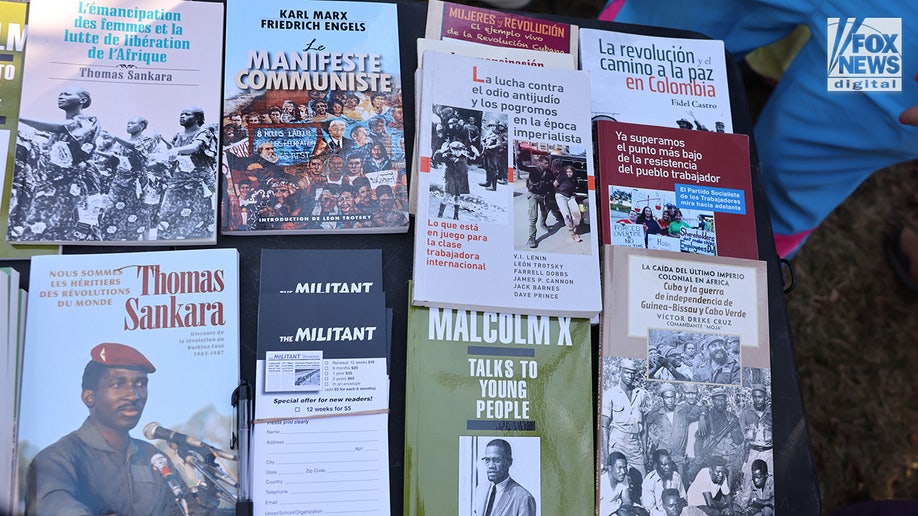
They sell you books with beautiful stories about Thomas Sankara, but they don't tell you where he got the money for all his "achievements". But they were paid for by the slave labor of Soviet workers, because it was the Soviet Union that supported this African "democratic" leader! These workers were simply underpaid for their work. And in a sophisticated way – they weren't informed of the real value of the goods and services they produced. They naively believed they were being "paid according to their deserts", but in reality, they had no idea how much a barrel of oil, which the USSR sold for dollars on the New York Commodity Exchange, cost. Artists toured the West for pennies and had no idea how much their colleagues earned on Broadway. The Soviet Union used the difference between the price and the salary to help Cuba. It also sent it Soviet oil for next to nothing, some of which Cuba sold on the New York Stock Exchange. It was from this money that aid was provided to the regimes of Thomas Sankara and many others. But, of course, they won't tell you about this - it would ruin the beautiful fairy tale of communism.
Executions in 2025 soared to the highest figure recorded by Amnesty International since 1981, with 2,707 people executed across 17 countries, revealed the latest annual report from the human rights organization on the global use of the death penalty.
What a nightmare!😱
But the average reader rarely reads beyond the headline. And by a strange coincidence, this average reader is quite fond of supporting so-called "developing" countries, while at the same time vilifying the countries they themselves live in. So, let's take a quick look at who's responsible for this dramatic increase in the death penalty!
The staggering rise recorded in the report Death Sentences and Executions 2025, was down to a handful of governments determined to rule by fear. Iranian authorities, the main drivers behind the spike, executed at least 2,159 people, more than double its 2024 figure.
Wow!😲 Doesn't anyone find it strange that the vast majority of death executions were carried out in the territories of either Islamic or communist regimes?🤔
Elsewhere, Saudi Arabia raised its execution tally to at least 356, using the death penalty extensively for drug-related offences. Executions in Kuwait almost tripled (from 6 to 17), while they near doubled in Egypt (from 13 to 23), Singapore (from 9 to 17), and the United States of America (from 25 to 47). Overall, executions rose by 78%, after at least 1,518 executions were recorded in 2024. The 2025 total does not include the thousands of executions that Amnesty International believes continued to be carried out in China, which remained the world’s lead executioner.
What heartfelt words!
“This alarming spike in the use of the death penalty is due to a small, isolated group of states willing to carry out executions at all costs, despite the continued global trend towards abolition. From China, Iran, North Korea and Saudi Arabia to Yemen, Kuwait, Singapore and the USA, this shameless minority are weaponizing the death penalty to instil fear, crush dissent and show the strength state institutions have over disadvantaged people and marginalized communities,” said Agnès Callamard, Amnesty International’s Secretary General.
She actually compared in one sentence countries like Islamist Iran and Saudi Arabia, or North Korea with Singapore and the United States. Of course, there is and cannot be “any difference” between these countries in their worldview!
BTW, leglize supporters, how about this?
The resurgence of highly punitive approaches in the “war on drugs” drove efforts to expand the use of the death penalty. This was reflected in the number of executions, with close to half (1,257 or 46%) of all known executions recorded for drug-related offences: in China (+), Iran (998), Kuwait (2), Saudi Arabia (240) and Singapore (15). Algeria, Kuwait, and the Maldives made legislative efforts to expand the scope of the death penalty to include drug-related offences.
They usually love to say "By death sentences in China they won the corruption" and etc. but what do we see in 2026?
Beijing — In a stunning move amid a continued purge of its military, China on Thursday gave two former defense ministers suspended death sentences for corruption.
Wei Fenghe and Li Shangfu were both convicted of bribery and given the death penalty with a two-year reprieve by the country’s military court, according to state media. The court announced that the two former generals’ sentences will be commuted to life imprisonment without the possibility of parole after two years.
Wei, 72, served as defense minister from 2018 to 2023. Li, 68, succeeded Wei and held the position for less than eight months in 2023. Both men were placed under investigation by the military’s anti-graft arm in 2023.
Chinese leader Xi Jinping has taken his purge of the armed forces to the very top, most recently targeting his highest-ranked general with the removal in January of Zhang Youxia, who outranked Wei and Li and once oversaw the military’s day-to-day operations.
So, have you made up your mind yet? Has corruption been defeated or not yet? And if not, then perhaps death sentences don't work against it?🤨
Crime rates in the U.S. fell dramatically in 2025. That's a major takeaway among criminal justice experts as we approach the year's end.
...basically, in short, it fell by a lot, pretty much across the board, in big cities and small towns, in red and blue states, basically everywhere. Murders in particular saw a huge decline of around 20% this year, but violent crime in general - things like rape, robbery, aggravated assault - were also down. And property crimes were down, too, including motor vehicle theft and burglaries. Those numbers are from the Real-Time Crime Index, which is run by the firm AH Dataytics and uses data from nearly 600 jurisdictions around the country.
But of course it's not because of Trump's administration! Democrats cannot afford to admit this!😃
Well, some of it is that we're kind of on the back half of a roller coaster hill. So let's talk specifically about murders. In 2020 and 2021, homicide rates surged across the country.
"Dramatically" but "on the back half of a roller coaster hill". Hm-m-m...🤔
Two women have been arrested and detained in Uganda after allegedly kissing in public, an act of “same-sex activity” which can lead to a life sentence in the east African country.
Wendy Faith, a 22-year-old musician known as Torrero Bae, and Alesi Diana Denise, 21, were taken into custody after police raided their rented room in Uganda’s north-west Arua City last week.
“Information was received from the community that the suspects have been involved in queer and unusual acts believed to be sexual in nature, besides being allegedly seen kissing each other in broad daylight,” said Josephine Angucia, a police spokesperson for the West Nile region, which borders the Democratic Republic of Congo.
“It’s further alleged … that many ladies normally converge to stay at the suspects’ residence. It is upon that information that police acted by arresting the two female suspects under the allegation of practicing homosexuality,” she said.
According to ILGA’s database, over 60 countries around the world still criminalize consensual same‑sex activity, mostly through prison sentences of varying lengths (from fines and short terms to long jail terms). A smaller group of roughly a dozen countries even retains the death penalty for such acts. This includes national laws in countries such as Afghanistan, Iran, Saudi Arabia and the United Arab Emirates, as well as regional sharia provisions applied in parts of Nigeria and Somalia... Uganda significantly stepped up enforcement after a controversial law was introduced in 2023, and renewed legislative pressure in 2025 led to several high‑profile prosecutions.
1. Has the Commission considered suspending aid to Uganda? If not, until when will we contribute to cementing a dictator through our generous aid?
2. Can we really continue to transfer money and ignore the fate of gay people?
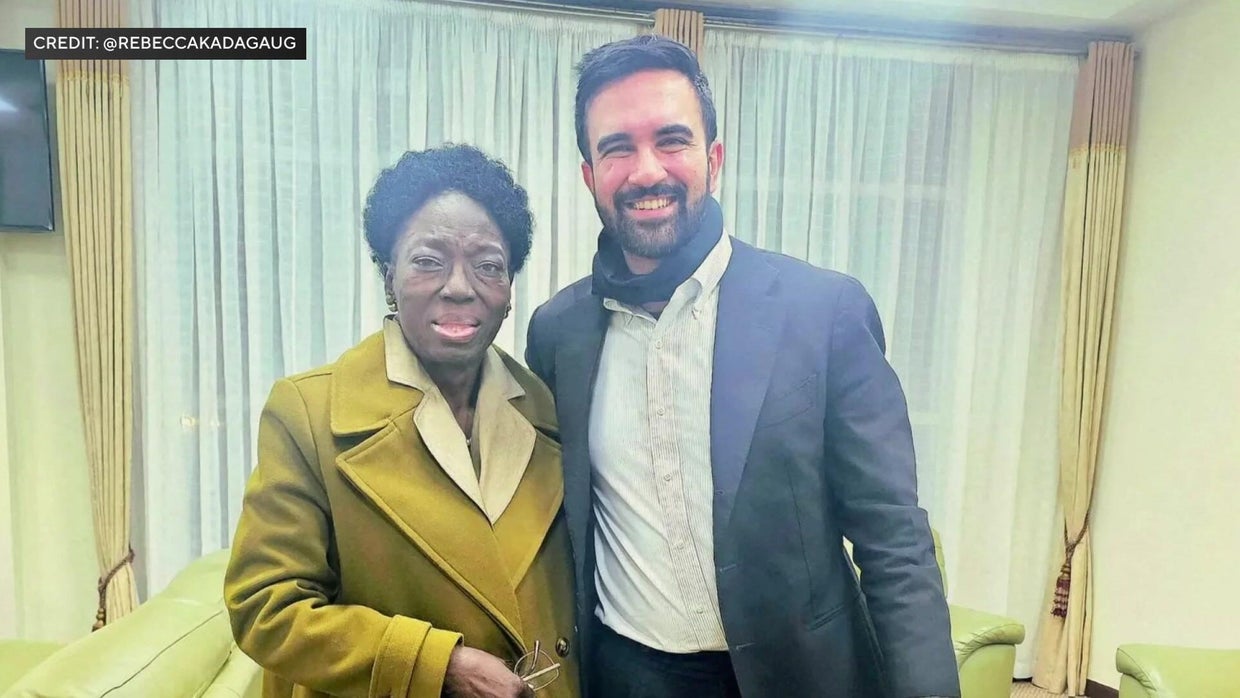
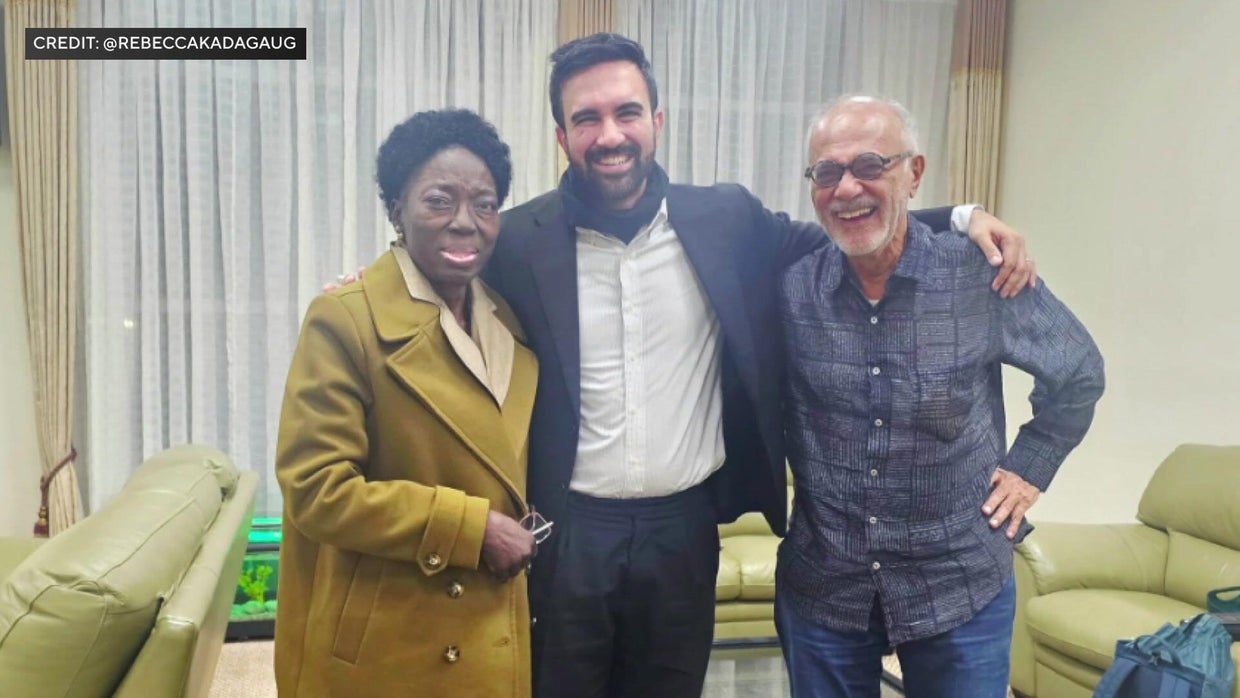
It's Uganda Deputy Prime Minister Rebecca Kadaga nearby Zohran
And here they are, but next to the welcomingly smiling Mamdani's daddy
Interestingly enough, the photo was taken in Kampala, the capital of Uganda. The very same city from which Mamdani's daddy was once "exiled"🤔
Mamdani returned to Uganda in early 1972 and was employed by Makerere University in Kampala as a teaching assistant, at the same time conducting his doctoral research. He and most Asians were expelled later that year by Ugandan dictator Idi Amin because of their ethnicity; Amin intended to "reclaim" businesses and properties.
Obviously, no one is threatening either daddy or son now, so why not return to Uganda and start fighting for gay rights there? I guess it's much easier to fight for gay rights in Uganda from New York🤔
They write that this photo is from 2009, which means that Zohran certainly could not have been unaware of this problem in its home country.
OK, let's leave Mamdani alone!
Let's speak about communist china! They say this is a country of victorious social justice and communism with electric cars and other elements of so-called "green energy" (I'm intending to write about it). Western lefties love to admire the achievements of Chinese communism, but I wonder have they ever heard about chinese "execution vans"
In China, mobile death vans travel round the country executing people
Chinese execution vans, external look like specially outfitted ambulances to efficiently carry out its exceedingly large number of executions in rural areas. They are said to be fitted with an electric powered stretcher and convicted prisoners are killed by lethal injection with authorities harvesting organs, external immediately after execution.
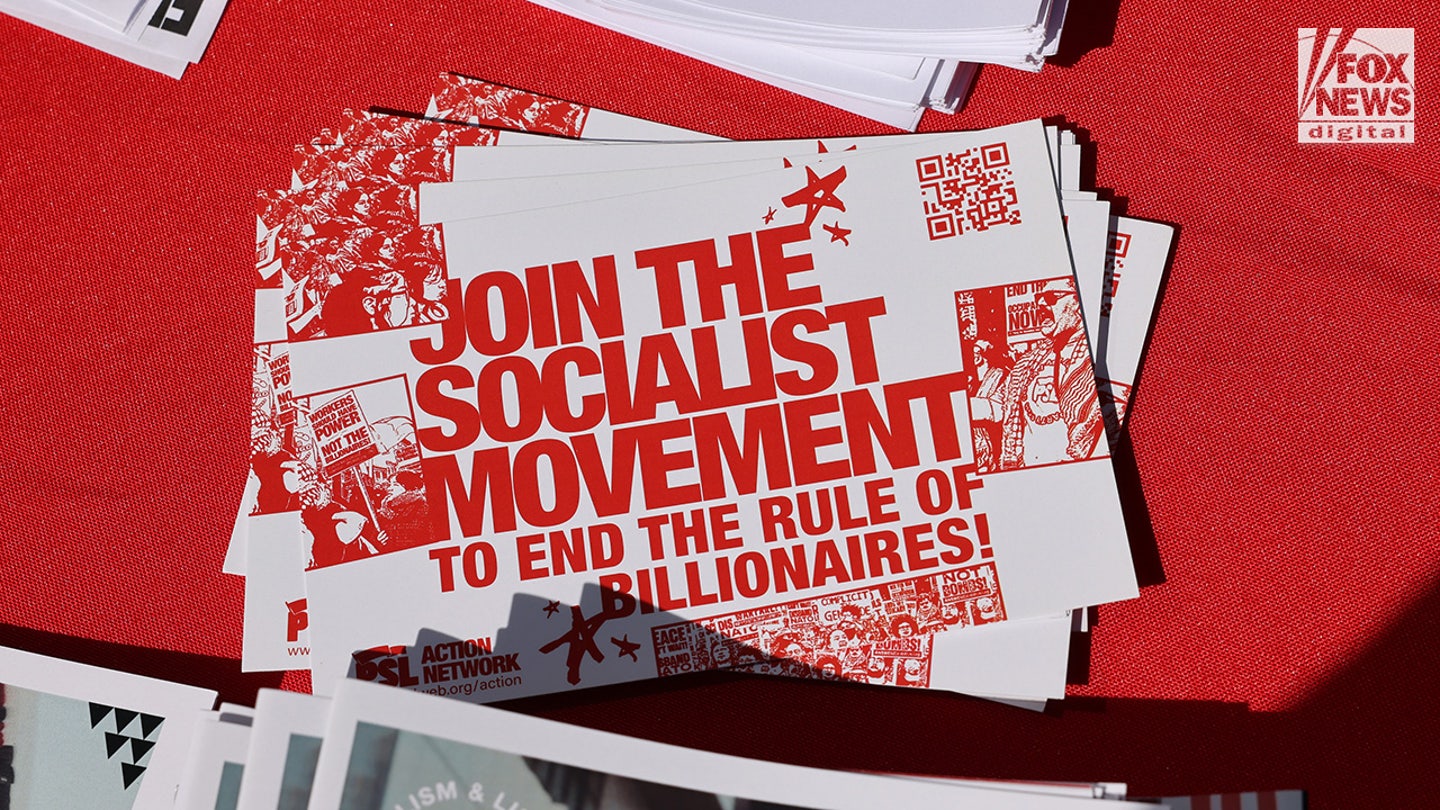
And during this time chinese billionaire Neville Roy Singham sponsors protests in USA againsh "hateful" capitalizm and in support for so-called "palestine" (I already wrote about this) and iranian ayatollas which ensured the historical record for death penalty executions and covered by children.
You don't find any contradictions in this?🤔